
Ready to Grow Your Social Media?
Join thousands of creators and businesses using NLO SMM Panel
SMM panels are one of the most misunderstood tools in the social media marketing ecosystem despite being one of the most widely used. Millions of creators, agencies, and small businesses rely on them for social media growth, yet most first-time users approach panels without understanding what they actually are, how they technically work, which service types to choose, or how to avoid the low-quality providers that produce more harm than benefit. This confusion produces two failure modes. First-time users either avoid SMM panels entirely and miss the legitimate growth acceleration they can provide when used correctly, or they use cheap panels blindly and damage their accounts through low-quality services that trigger platform enforcement. In this detailed SMM panel breakdown from the NLO SMM team, we cover exactly what an SMM panel is, how the panel infrastructure actually delivers services behind the scenes, the different categories of SMM services available across all major platforms in 2026, the specific quality signals that distinguish reliable panels from harmful ones, the pricing structures panels use and what each price tier actually delivers, the step-by-step process of using an SMM panel correctly, the common mistakes that waste budget without producing results, and the reseller business model that lets entrepreneurs build their own social media marketing services businesses using panel infrastructure. Whether you are a creator considering panel services for the first time, an agency evaluating provider options, or an aspiring reseller researching the business model, this guide provides the technical clarity that panel providers rarely share openly.
Our team has operated an SMM panel serving thousands of customers globally across every major social media platform since the panel category emerged. Every recommendation here is grounded in what actually happens inside panel operations rather than marketing language from provider websites. Not sales pitches. Not vague generalities. The specific mechanics that determine whether panel usage helps or hurts specific customer accounts, plus how to create your NLO SMM account if you want to test the panel model for yourself with services covering Instagram, TikTok, YouTube, Facebook, Spotify, X, LinkedIn, Twitch, Snapchat, and beyond.
What SMM Panel Actually Is
SMM stands for Social Media Marketing. An SMM panel is a web-based platform where customers order social media services (followers, likes, views, comments, and other engagement metrics) for their accounts across various social media platforms. Understanding this basic definition clarifies what panels actually do versus what marketing language sometimes implies.
The Core Panel Function
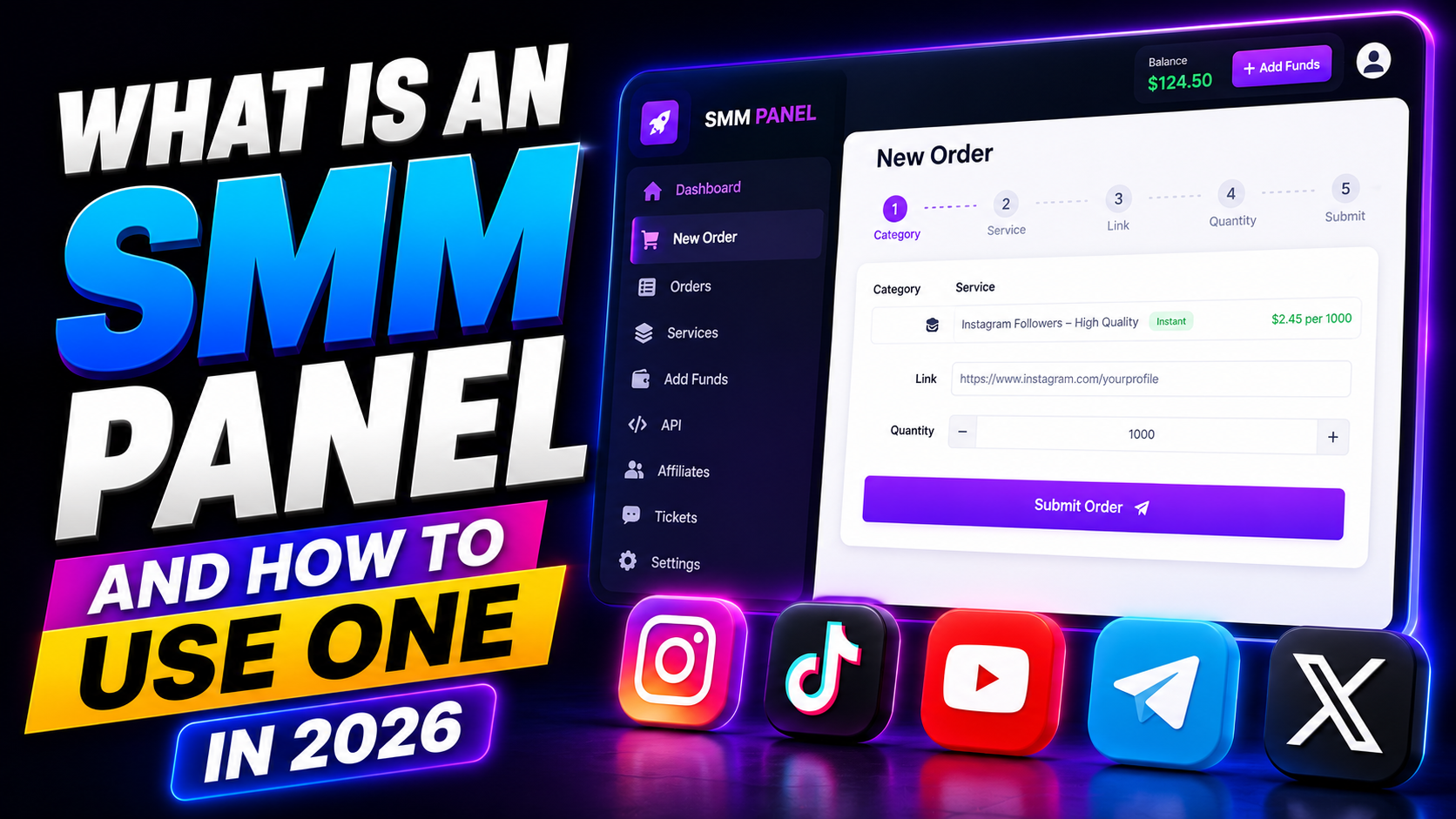
An SMM panel functions as an order management system connecting customers who want social media services with the delivery infrastructure that actually produces those services. Customers browse a service catalog, place orders specifying target URL and quantity, pay through the panel's payment methods, and receive delivery within specified timeframes. The panel handles order routing, delivery tracking, refill guarantees, and customer support.
This aggregator model is what makes SMM panels different from direct engagement services. Rather than each customer needing to source engagement from multiple different providers for each platform, panels centralize everything into a single dashboard. One account. One payment method. All the platforms and service types available through the same interface. This centralization is why panels became the dominant delivery model in social media marketing over the past decade.
Understanding this model clarifies what customers actually purchase. They are buying access to engagement delivery infrastructure operated by panel providers, not directly hiring individual accounts to engage with their content. The distinction matters because service quality depends entirely on the underlying delivery infrastructure quality, not on the panel's user interface polish or marketing sophistication.
What SMM Panels Are Not
SMM panels are not magic growth machines that guarantee viral success. They are not replacements for content quality, posting consistency, or audience engagement strategy. They are not shortcuts to bypass platform algorithms permanently. They are not guaranteed protection against platform enforcement if used carelessly with low-quality services.
Setting realistic expectations about what panels do and do not do prevents disappointment and misuse. Panels provide engagement acceleration that can support broader growth strategies when used thoughtfully. They cannot substitute for the fundamental content and community work required for sustainable social media presence. In my experience across observed customer accounts, users who understand this distinction consistently get better outcomes than users who expect panels to solve their growth problems entirely.
How SMM Panels Actually Work
Understanding the technical mechanics of how panels deliver services reveals why service quality varies enormously across providers and why some panels produce lasting results while others produce short-lived engagement that disappears or triggers enforcement.
The Provider Chain Architecture
Most SMM panels operate as intermediaries between end customers and upstream service providers who actually control the engagement delivery infrastructure. A panel receives an order, routes it to the appropriate upstream provider based on service type and quality tier, receives delivery confirmation, and reports completion to the customer. The provider chain can extend multiple layers deep, with each layer taking margin on the transaction.
This multi-layer architecture explains price variation across panels. Panels reselling from cheap upstream providers can offer very low prices but pass through the quality issues of those upstream sources. Panels operating direct relationships with premium delivery infrastructure charge more but deliver materially better service quality. Understanding which category a specific panel operates in requires evaluating actual service outcomes rather than trusting marketing claims.
The Delivery Infrastructure
Actual service delivery happens through several distinct mechanisms depending on service type. Follower and subscriber services often route through account networks where the delivering accounts perform the follow action from real or simulated user profiles. Like and view services often route through engagement automation infrastructure that produces the interaction actions on the target URLs. Comment services route through content generation or account network commenting on the target posts.
Each delivery mechanism has different quality implications. High-quality delivery uses authentic-appearing account patterns, spaced-out engagement timing that matches organic patterns, and geographic distribution matching typical audience demographics. Low-quality delivery uses obvious bot patterns, mass-simultaneous engagement bursts, and geographic distribution that does not match typical audience patterns. Platform algorithms distinguish these patterns and respond differently.
Refill Systems and Drop Handling
Delivered followers sometimes drop over time as delivering accounts get banned, disappear, or unfollow. Quality panels offer refill guarantees where dropped followers get replaced automatically or on request within specified timeframes (typically 30 to 365 days depending on service). This refill infrastructure requires ongoing provider effort but produces materially better long-term customer outcomes than services without refill support.
Non-refill services deliver initial engagement without replacement of drops. These services are typically cheaper but produce declining metrics over time as natural drops occur. Understanding whether a specific service includes refill support helps set realistic expectations about whether the delivered count will persist or gradually erode. Reading service descriptions carefully before ordering prevents misunderstandings about long-term result stability.
Types of SMM Services You Can Order
Modern SMM panels offer service catalogs spanning multiple platforms with dozens of service variations per platform. Understanding the main service categories clarifies which services actually match specific growth objectives.
Follower and Subscriber Services
Follower services (Instagram, TikTok, X) and subscriber services (YouTube) increase the account's follower or subscriber count metric. This is the most-ordered service category because follower count serves as social proof signal that influences how other viewers perceive the account. Higher follower counts often produce increased organic follow rates from viewers who see the higher count.
Follower services vary in quality tier from basic (accounts with minimal profile signal) to premium (accounts with authentic-appearing profiles, activity history, and organic engagement patterns). Price differences reflect this quality variation. Basic followers cost pennies per unit while premium followers cost multiples more. Choosing the appropriate tier depends on account visibility and how heavily viewers actually check follower profile quality.
Like and Reaction Services
Like services increase the interaction count on specific posts, videos, or content pieces. This category produces engagement-rate signal that influences algorithm distribution decisions on most platforms. Higher engagement rates during content's initial launch window often trigger broader organic distribution as algorithms interpret strong engagement as content quality signal.
Like service delivery timing matters enormously for algorithm-influencing purposes. Likes delivered within the first 30-60 minutes after posting affect the algorithm's Phase 1 distribution decisions. Likes delivered days later contribute to raw counts but do not affect distribution expansion. Understanding this timing sensitivity guides when to place like orders for maximum impact.
View and Play Services
View services (YouTube, TikTok, Instagram Reels, Facebook video) increase view counts on video content. View counts serve as social proof signal and directly affect algorithm distribution decisions on most video platforms. Play services (Spotify) increase stream counts for music tracks, contributing to monetization and playlist algorithm signals.
View service quality varies dramatically. High-quality views include watch time delivery matching natural viewer patterns (viewing the video for realistic durations rather than millisecond flash views). Low-quality views deliver raw impression counts without meaningful watch time. Platform algorithms increasingly distinguish these patterns, making view quality tier selection critical for services intended to influence distribution rather than just inflate visible counts.
Comment Services
Comment services deliver text comments on specific posts, videos, or tracks. Comments produce strong engagement signal for most platform algorithms because commenting requires more effort than liking, signaling deliberate engagement. Custom comments (specific text provided by customer) versus generic comments (random relevant text) offer different outcomes for different objectives.
Custom comments work well for creating specific narrative appearance (positive reviews, specific questions matching content themes, engagement patterns that support conversion goals). Generic comments work well for broad engagement volume when specific text is not critical. Understanding which type serves your specific objective determines which service category to order.
Who Actually Uses SMM Panels
SMM panel customers span diverse categories with different objectives. Understanding who uses panels and why clarifies whether panel services fit your specific situation.
Individual Creators and Personal Brands
Individual creators building personal brands represent one of the largest panel customer categories. Creators use panels for cold-start acceleration on new accounts, social proof establishment for accounts targeting sponsor deals or business opportunities, and occasional boost campaigns for specific high-priority content launches. Combined with organic content strategy, panel usage supplements broader growth rather than replacing organic work.
The most successful individual creator use cases we have observed involve using panels strategically at specific inflection points (new account launch, viral moment amplification, sponsor pitch preparation) rather than as ongoing engagement sustenance. This strategic usage produces sustainable growth acceleration without dependency on continued panel spending.
Small Businesses and Local Brands
Small businesses and local brands use panels for establishing basic social credibility on their business accounts. Restaurants, local service businesses, small ecommerce brands, and personal service providers often use panel services to reach baseline follower counts that make their profiles appear legitimate to potential customers checking their social presence before making purchase decisions.
The social credibility use case has specific optimization patterns. A restaurant with 47 followers looks inactive. Same restaurant with 2,500 followers looks established. The perception difference translates directly to walk-in customer conversion rates that pay for panel investment multiple times over.
Agencies and Marketing Professionals
Marketing agencies serving multiple client accounts use panels for client social media growth campaigns. Agencies benefit from panel efficiency because managing engagement across many client accounts through individual organic strategy would require enormous team resources. Panels centralize the growth infrastructure making agency operations economically viable at scale.
Agency panel usage typically involves higher-quality service tiers than individual creators because agency client accounts often have higher stakes (established brands with reputation risk) and agency clients may check follower quality more carefully than individual creators would. Quality tier selection matters more when client accountability is involved.
Musicians and Artists
Musicians building streaming careers use panels for Spotify plays, Apple Music streams, SoundCloud engagement, and YouTube Music video views. The music industry has specific growth economics where playlist eligibility, algorithmic playlist inclusion, and playlist curator attention all depend on streaming momentum that panel services can support during release windows.
Quality Signals to Look For in an SMM Panel
Not all SMM panels operate at equivalent quality levels. Understanding the specific signals that distinguish reliable panels from harmful ones prevents wasted budget and account damage.
Service Delivery Speed and Consistency
Quality panels deliver services within stated timeframes consistently. Delivery estimates should match actual delivery times. Orders should progress from processing to partial completion to full completion on predictable schedules. Panels that consistently miss delivery estimates or leave orders incomplete demonstrate operational quality issues that likely reflect broader infrastructure problems.
Testing delivery reliability requires placing small test orders across different service types before committing larger budgets. This test-and-measure approach reveals whether the panel actually delivers what it promises or whether marketing claims exceed operational reality. Trusted panels welcome test orders because they know their delivery holds up to inspection.
Refill and Guarantee Terms
Quality panels offer clear refill terms for services that support refill (typically follower and subscriber services). Refill terms should specify duration coverage, how refills are triggered, and what response times to expect for refill requests. Vague or absent refill terms often indicate panels that intend to avoid refill obligations regardless of stated policies.
Testing refill responsiveness on small orders reveals whether stated refill terms actually operate reliably. Placing test orders, waiting through the guarantee window, and verifying that any drops receive replacement demonstrates actual refill infrastructure. Panels that ignore refill requests despite advertised policies expose themselves quickly during this testing process.
Customer Support Responsiveness
Quality panels operate customer support that responds to inquiries within reasonable timeframes with actual answers rather than deflection. Support quality often correlates with overall operational quality because both reflect ownership investment in customer outcomes. Testing support responsiveness before large budget commitments reveals whether the panel actually cares about customer results.
Support testing involves asking specific technical questions about service quality, delivery timing, and refill mechanics. Panels providing clear informed answers demonstrate operational knowledge. Panels providing evasive or contradictory answers signal that the operators either do not understand their own product or actively hide problematic aspects.
Service Quality Determines Outcome
The single biggest factor determining whether SMM panel usage helps or hurts is service quality. High-quality services align with organic growth strategy and support algorithm favor. Low-quality services trigger platform enforcement and produce more damage than the delivered engagement is worth. Choosing the right panel matters more than any other decision in the SMM process.
Warning Signs of Low-Quality SMM Panels
Recognizing red flags before committing budget prevents the account damage and wasted spending that low-quality panels produce. These warning signs should trigger immediate reconsideration of specific providers.
Prices That Are Too Good to Be True
Panel pricing follows infrastructure cost realities. Delivering authentic-appearing engagement at scale requires operational investment that shows up in prices. Panels advertising prices dramatically below the market range (60-80 percent lower than typical) can only be delivering low-quality services that will not produce the outcomes customers expect.
The math is straightforward. Sustainable service delivery has minimum operational costs. Providers pricing below those minimums either lose money (unsustainable business model that will disappear) or deliver such low-quality services that platform algorithms will identify and often penalize the accounts using them. Extremely cheap prices are the loudest possible signal of quality problems.
Instant Delivery on All Services
Panels promising instant delivery on all services including follower and subscriber orders demonstrate infrastructure quality problems. Authentic-appearing service delivery requires timing that matches organic engagement patterns. Real followers accumulate over hours and days as different accounts encounter the target profile and decide to follow. Instant thousands of followers indicate bot infrastructure that platforms increasingly identify and act on.
Quality panels offer both instant and gradual delivery options where the gradual delivery option costs slightly more but produces materially better outcomes. Panels offering only instant delivery across all services demonstrate that they operate infrastructure incapable of producing organic-timing engagement patterns.
Missing Contact Information and Company Details
Legitimate panel operators publish contact information, business details, and terms of service that identify who operates the platform. Panels operating anonymously with no verifiable business identity make customer disputes essentially impossible to resolve because there is nobody accountable to complaints. Anonymous operations correlate strongly with quality problems that operators want to escape accountability for.
SMM Panel Pricing Structure Explained
Understanding how SMM panel pricing works clarifies what different price tiers actually deliver and how to allocate budget across service categories effectively.
Per-Unit Pricing Structure
SMM panels price services on per-unit basis (per thousand followers, per thousand views, per hundred likes) with total order cost calculating from unit price times quantity. Different service quality tiers command different unit prices, with premium quality typically costing 3-10 times basic quality per unit. Choosing appropriate tiers requires understanding what each tier actually delivers rather than defaulting to cheapest options.
Volume discounts apply on some panels for larger orders. Bulk purchases across order thresholds may unlock reduced per-unit pricing that improves budget efficiency for high-volume customers. Understanding volume tier thresholds helps agencies and resellers optimize their purchasing patterns for maximum cost efficiency.
Deposit and Payment Models
Most panels operate on prepaid deposit models where customers fund accounts before placing orders. Deposits can be added through multiple payment methods (credit cards, cryptocurrency, PayPal, bank transfer depending on panel). Deposit-based ordering simplifies transaction management for repeat customers and enables reseller businesses to buffer their working capital.
Some panels offer post-payment options for verified customers or accept payment at order placement. These payment flexibility options make sense for occasional customers who do not want to maintain funded accounts. Choosing between deposit and per-order payment depends on order frequency and cash flow preferences.
How to Use an SMM Panel Step by Step
Using an SMM panel for the first time involves specific steps that produce better outcomes when followed correctly than when improvised. This step-by-step guide walks through the standard usage flow.
Account Creation and Funding
Panel usage begins with account creation on the chosen panel using email address and password. Some panels require basic identity verification for larger deposits or specific service categories. After account creation, funding involves selecting payment method, entering deposit amount, and completing the payment transaction. Funded balance becomes available for ordering typically within minutes after payment confirmation.
First-time users benefit from starting with small deposits ($5-$25) to test the panel operations before committing larger budgets. This test funding approach limits downside risk while providing full visibility into how the panel actually operates. After confirming reliable delivery on test orders, larger deposits become reasonable investment.
Service Selection and Order Placement
The service catalog displays all available services organized typically by platform. Selecting the platform (Instagram, TikTok, YouTube, Spotify, etc.), then the specific service type (followers, likes, views, comments), then the specific tier reveals the specific service options available. Reading service descriptions carefully before ordering prevents mismatched expectations about delivery details.
Order placement requires specifying the target URL (link to the profile, video, or post receiving the service) and the quantity ordered. The panel calculates total cost from unit price and quantity. Order confirmation submits the order to the panel's delivery infrastructure. Order status becomes visible in the account dashboard tracking progress from placement to completion.
Monitoring Delivery and Verifying Completion
After order placement, monitoring delivery progress through the panel dashboard shows completion percentage over time. Different services complete on different timelines from immediate (some like services) to several days (large gradual follower orders). Checking delivery against stated timeframes verifies that the panel operates reliably.
Verifying completion involves checking the target account to confirm the delivered service actually shows on the target profile, video, or post. Occasional discrepancies happen and should trigger customer support contact for resolution. Panels with quality operations respond to legitimate discrepancy reports with either delivery correction or refund processing.
Common Mistakes That Waste SMM Budget
Understanding common panel usage mistakes prevents the budget waste that first-time users often experience. These mistakes typically account for the vast majority of negative panel experiences.
Choosing Cheapest Over Quality
The single most common mistake is optimizing for cheapest per-unit prices regardless of service quality. Cheap services often deliver counts without meaningful account benefit and can trigger platform enforcement that damages the account. Paying 3-5 times more for quality service tier typically produces materially better outcomes than paying minimum for basic tier.
Ordering Wrong Service Types
Ordering follower services when engagement is the actual need (or vice versa) produces disappointing outcomes because different metrics serve different purposes. Follower counts affect social proof perception. Engagement rates affect algorithm distribution. View counts affect algorithm and monetization signals. Matching service type to actual growth objective prevents wasted spending on services that do not produce the desired outcome.
Poor Delivery Timing
Placing engagement orders (likes, views, comments) hours or days after posting misses the algorithm's Phase 1 evaluation window where engagement signals actually influence distribution decisions. Ordering these services within 30-60 minutes after posting produces materially better algorithmic influence than ordering later. Coordinating order timing with posting schedule matters enormously for algorithm-focused services.
The SMM Panel Business Model (Reseller Guide)
SMM panels enable a specific business model where entrepreneurs build their own social media services businesses using panel infrastructure. Understanding this reseller model clarifies whether the opportunity fits your business objectives.
How Reseller Panels Work
Reseller panels (also called child panels or master panel connections) let entrepreneurs offer social media services under their own brand while sourcing delivery from underlying panel providers. The reseller builds their own customer-facing website, brand, and customer support while the underlying panel handles actual service delivery. The reseller profits from the margin between their retail prices and their wholesale panel costs.
The business model has genuine appeal because it lets entrepreneurs enter the SMM services market without needing to build delivery infrastructure themselves. Building delivery infrastructure requires enormous capital investment and technical operations. Reselling from established panels lets entrepreneurs focus on marketing, customer acquisition, and support while the underlying panel handles operations.
Realistic Reseller Economics
Successful SMM reseller businesses typically produce $2,000-$50,000 monthly revenue for solo operators with margins ranging from 30-60 percent depending on marketing efficiency and customer acquisition costs. Larger reseller operations with dedicated teams and marketing budgets can reach $100,000+ monthly revenue with corresponding operational complexity.
The economics depend heavily on customer acquisition efficiency. Resellers driving organic customer traffic through SEO, content marketing, or community building often achieve better margins than resellers relying purely on paid advertising. Understanding customer acquisition dynamics is more important for reseller business success than the underlying panel quality (though quality still matters for customer retention).
Frequently Asked Questions About SMM Panels in 2026
What does SMM stand for?
SMM stands for Social Media Marketing. An SMM panel is a web-based platform where customers can order social media services (followers, likes, views, comments, subscribers, and other engagement metrics) for their accounts across various social media platforms including Instagram, TikTok, YouTube, Facebook, Twitter, Spotify, LinkedIn, and others.
Are SMM panels legal to use?
SMM panels operate as legal businesses in most jurisdictions selling social media services. Platform terms of service on individual social networks may restrict certain engagement service usage. Understanding the distinction between legal operation and platform terms compliance helps customers make informed decisions about which services fit their risk tolerance.
Will using an SMM panel get my account banned?
Quality service usage rarely produces bans on established accounts. Low-quality service usage or extreme volume dumps can trigger platform enforcement including account suspension. Service quality, delivery timing, and volume moderation all affect whether panel usage produces positive or negative account outcomes.
How fast do SMM panels deliver services?
Delivery times vary by service type and quality tier. Instant services complete within minutes to hours. Standard gradual delivery services complete within 12-72 hours. Large follower orders on premium tiers may take 3-14 days to complete for authentic-appearing organic delivery patterns. Speed and quality often trade off.
What is the difference between cheap and quality SMM services?
Cheap services typically deliver counts through basic infrastructure that platforms may detect and act on. Quality services use authentic-appearing account patterns, natural timing, and geographic distribution matching organic engagement. Quality services cost 3-10 times more per unit but produce sustainable results without account enforcement risks.
Can I start an SMM panel business?
Yes. Reseller panels enable entrepreneurs to build SMM services businesses under their own brand while sourcing delivery from underlying providers. Successful solo operator resellers typically produce $2,000-$50,000 monthly revenue. Larger operations with teams reach $100,000+. Customer acquisition efficiency matters more than panel selection for business success.
Do SMM panels work for all social platforms?
Modern panels cover major platforms including Instagram, TikTok, YouTube, Facebook, Twitter (X), Spotify, SoundCloud, LinkedIn, Snapchat, Twitch, Telegram, Discord, Reddit, Pinterest, and others. Service availability varies by panel and platform. Comprehensive panels like NLO SMM cover essentially all major platforms with multiple service types per platform.
What payment methods do SMM panels accept?
Payment methods vary by panel. Common options include credit and debit cards, cryptocurrency (Bitcoin, Ethereum, USDT, and others), PayPal, bank transfers, and regional payment methods. Multiple payment options typically indicate more established panel operations with broader customer service infrastructure.
Do panels offer refunds if services fail?
Quality panels offer refunds or refills for services that fail to deliver as promised. Terms vary. Some panels offer only refills within specified periods. Others offer refunds when refills are not possible. Understanding refund and refill terms before ordering prevents disputes about what happens when problems occur.
Is there minimum order size on SMM panels?
Most panels set minimum orders per service, typically 100 units for followers or 500 units for likes and views. Some services have higher minimums for cost efficiency reasons. Panel dashboards clearly display minimums during order placement, allowing customers to select appropriate quantities.
How do I choose the best SMM panel for my needs?
Best panel selection depends on your specific needs. Consider service quality track record through test orders, delivery reliability, refill guarantees, customer support responsiveness, payment method options, and price competitiveness for the specific services you actually need. Placing small test orders across candidate panels reveals which one best matches your quality requirements before committing larger budgets.
Final Thoughts
SMM panels represent a real and increasingly sophisticated segment of the social media marketing ecosystem. When used with understanding of what they can and cannot do, quality selection based on actual delivery infrastructure rather than marketing claims, and strategic timing that aligns with algorithm dynamics on target platforms, they provide meaningful growth acceleration that supports broader organic content strategies. When used with expectation that they will magically solve growth challenges without underlying content quality, or with selection based purely on cheapest available prices, they produce disappointing outcomes and can damage the accounts they were intended to help.
The customers who consistently succeed with panel services approach them as one tool in a broader growth toolkit rather than a standalone solution. They select panels based on delivery track record demonstrated through test orders, use appropriate quality tiers for their specific accounts, time engagement orders to align with algorithm evaluation windows, and combine panel services with authentic content strategy that gives the accelerated engagement something worth engaging with. This strategic approach produces the outcomes that panel marketing promises.
The NLO SMM panel operates the delivery infrastructure and service catalog that supports both individual creators seeking growth acceleration and reseller entrepreneurs building their own SMM services businesses. Combined with the platform-specific growth strategies covered across our other guides on Instagram, TikTok, YouTube, Spotify, X, LinkedIn, and beyond, deliberate social media growth becomes an operational system rather than a lottery. The creators and businesses succeeding in 2026 are executing specific playbooks, and understanding what SMM panels actually are represents one foundational element of those playbooks.
Ready to Boost Your Social Media Presence?
Join thousands of satisfied customers who trust NLO SMM Panel for their social media growth.