
Ready to Grow Your Social Media?
Join thousands of creators and businesses using NLO SMM Panel
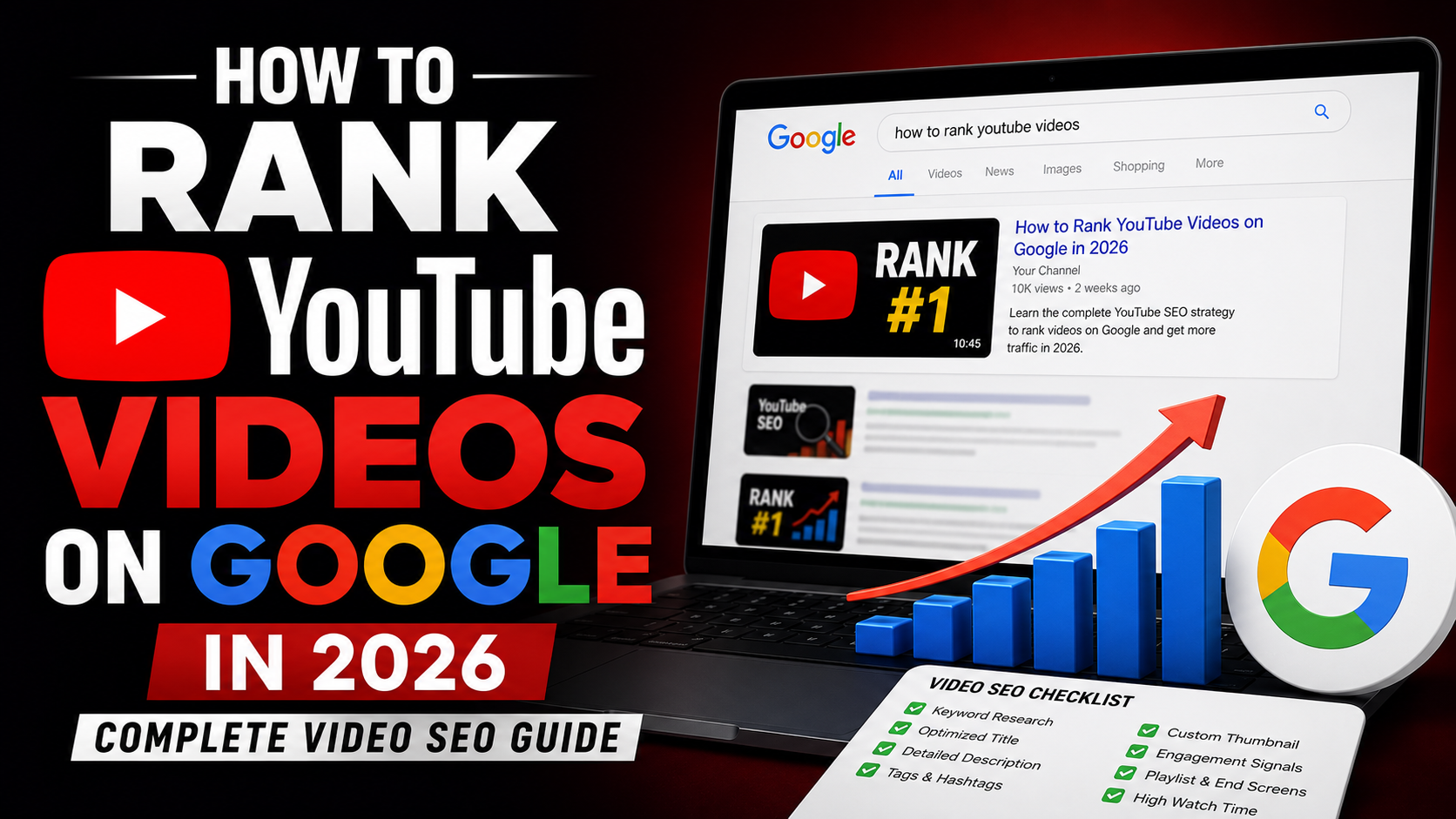
Ranking YouTube videos on Google search is one of the most underrated organic traffic opportunities in 2026 because most creators optimize videos exclusively for YouTube's own search and recommendation algorithms without thinking about Google's separate video ranking system. This oversight leaves substantial free traffic on the table. Videos ranking on Google's first page for high-intent search queries can generate 5,000 to 100,000 monthly views entirely from Google referrers, bypassing YouTube's own discoverability limits and reaching audiences that would never find the video through YouTube's internal surfaces alone. In this detailed video SEO breakdown from the NLO SMM search team, we cover exactly how Google's video ranking system works in 2026, why it differs from YouTube's internal ranking, the specific query types that trigger video results in Google SERPs, the keyword research process that identifies rankable video opportunities, the title and description optimization mechanics that Google's crawlers actually read, the thumbnail CTR feedback loop that stabilizes rankings over time, the video schema markup that produces rich snippet visibility, and the early amplification signals that accelerate the ranking timeline most creators wait months to naturally accumulate.
Our team has tracked YouTube video ranking data across dozens of channels spanning content categories including tutorials, product reviews, educational explainers, business analysis, and how-to guides. Every recommendation here is grounded in what actually moved rankings on tracked videos, cross-referenced against Google's public documentation and Search Central guidance for video content. Not theoretical SEO speculation. The specific tactics that produce measurable Google ranking movement on real videos, plus the full NLO SMM services catalog that supports both cold-start amplification for new videos targeting Google rankings and ongoing velocity acceleration for established channels expanding into video-first search verticals.
Why YouTube Videos Rank on Google Differently Than Web Pages
Google treats video content as a distinct search vertical with its own ranking mechanics that differ substantially from how the algorithm ranks web pages. Understanding these differences produces materially better video SEO strategy than applying identical web page tactics to video content.
The Two Ranking Algorithms at Work
YouTube videos ranking on Google involves two separate ranking systems working in parallel. Google's ranking algorithm decides whether video results appear for a specific query and which videos rank in what positions. YouTube's own recommendation algorithm decides what happens after a viewer clicks through from Google, controlling subsequent recommendations and session behavior. These two algorithms operate independently but influence each other through user behavior signals.
Google's video ranking algorithm evaluates videos on factors including query relevance (does the video actually match search intent), title and description alignment (do the metadata elements match query semantics), thumbnail attractiveness (does the video get clicks when shown in results), video quality signals (watch time, engagement rate), and external authority signals (embeds on high-authority sites, backlinks to the video, brand mentions). Understanding this evaluation framework changes what you optimize for.
In my experience across tracked videos, creators who understand the dual-algorithm reality of Google video rankings dramatically outperform creators who only think about YouTube optimization. The compounding advantage of Google-first video SEO becomes visible within 4 to 12 weeks when videos start accumulating stable organic traffic from Google referrers that continues indefinitely once rankings establish.
Video-First vs Video-Optional Queries
Google shows video results for two distinct query categories. Video-first queries where the searcher explicitly wants video content (queries containing "how to," "review," "tutorial," "watch," or product demonstration intent). Video-optional queries where video results appear alongside web pages because Google predicts users may prefer video for that specific topic even without explicit video intent.
Video-first queries produce the highest-value ranking opportunities because searchers land on videos with explicit video intent, producing higher watch time and better session behavior than searchers randomly clicking video results from mixed SERPs. Optimizing specifically for video-first queries produces materially better traffic quality than chasing video-optional query rankings that produce lower engagement per click.
Identifying video-first queries in your niche requires specific keyword research approaches different from web page keyword research. Tools like Ahrefs and Semrush have added video-specific SERP analysis that reveals which queries trigger video results and which queries produce pure web page SERPs. Focusing keyword research on video-triggering queries changes what content you produce and what rankings you can realistically achieve.
The Universal Search Blend and Video SERP Positions
Understanding where videos appear in Google search results clarifies why some video ranking positions produce dramatically more traffic than others despite ranking on the same first page. The visual layout of video results interacts with click-through rate mechanics in specific ways.
Video Carousels and Their Traffic Impact
Google frequently displays video carousels (horizontal scroll of 3 to 10 video thumbnails) at the top of SERPs for video-triggering queries. These carousels often appear above traditional web page results, effectively pushing organic web results below the fold and giving carousel videos massive click-through advantage. Ranking in the video carousel is often more valuable than ranking position 1 in the web results below it.
Video carousel inclusion depends on query intent, video freshness, and quality signals. Recently published videos get preferential carousel inclusion for trending queries. Established videos get long-term carousel positions for evergreen queries. The specific factors determining carousel inclusion differ from pure ranking factors, which is why some videos appear in carousels without being the highest-ranked in traditional web results.
Individual Video Results and Rich Snippets
Beyond carousel positions, individual video results appear throughout Google SERPs with rich snippets showing duration, publish date, view count, and channel name. These enhanced snippets often produce 2 to 4 times higher click-through rate than plain text results because they visually stand out and provide immediate context about video content.
Rich snippet display requires proper video schema markup on the page hosting the video (either the YouTube video page itself, or embedded contexts on external sites). Videos with complete schema markup consistently outperform videos with missing or incomplete markup because their SERP presentation drives more clicks even at equivalent ranking positions.
YouTube's Own Ranking Signals vs Google's Ranking Signals
The distinction between what YouTube values internally and what Google values for its own rankings deserves specific attention because optimization strategies diverge based on which system you prioritize.
YouTube Internal Ranking Priorities
YouTube's internal algorithm prioritizes watch time, session duration, engagement rate (likes, comments, shares as percentage of views), audience retention, and subscriber conversion. These signals influence what videos YouTube recommends in its own surfaces (home feed, watch next suggestions, search results within YouTube).
Optimizing for YouTube's internal algorithm produces videos structured for maximum on-platform engagement. Longer content that increases watch time. Retention hooks that keep viewers watching through the video. Cliffhangers that push viewers to next recommendations. This optimization produces excellent YouTube performance but does not necessarily produce Google rankings because Google evaluates different signals.
Google Ranking Priorities for Video
Google's ranking algorithm prioritizes query relevance (does the video actually answer the specific query), page authority (does the hosting page have external authority signals), user intent match (does the video satisfy the search intent behind the query), technical implementation (proper schema markup, correct hosting), and click-through rate from SERP (do users click on this video when shown).
Optimizing for Google rankings produces videos with sharper query-focus, stronger metadata alignment with target queries, and complete technical implementation. The optimization overlaps with YouTube optimization but produces different content decisions in edge cases. Google-first videos often address specific queries more directly rather than building topical breadth that YouTube's algorithm sometimes rewards.
Keyword Research for Video SEO in 2026
Keyword research for videos differs meaningfully from web page keyword research because different query patterns trigger video results. Understanding video-specific keyword research produces target lists that actually produce ranking opportunities rather than wasted content investment.
Query Types That Trigger Video Results
Specific query patterns consistently trigger video results in Google SERPs. How-to queries ("how to X," "how to do Y") almost always show video results because Google interprets tutorial intent. Review queries ("X review," "Y vs Z comparison") frequently show video results because reviews benefit from visual demonstration. Product demonstration queries ("what is X," "X unboxing") reliably show videos because visual product content matches searcher intent.
Educational and explainer queries ("what is X," "how does Y work") often show video results because complex topics benefit from visual explanation. Technique-focused queries in creative or physical domains ("how to draw X," "how to do Y yoga pose") almost exclusively show video results because static text cannot adequately convey the required visual guidance.
Identifying these query patterns in your niche requires specific research. Tools like Ahrefs Keywords Explorer show SERP features for target keywords including video result presence. Semrush's SERP Features filter allows filtering keyword lists to show only video-triggering queries. Manual SERP inspection using Google search for candidate queries confirms whether videos actually appear at rank positions 1-10.
Search Volume vs Video Competition
Traditional keyword metrics like search volume matter for videos, but video-specific competition dynamics differ from web page competition. A query with 5,000 monthly searches might have 1,000 competing web pages but only 50 competing videos, producing much better ranking odds for video content targeting the same query.
Evaluating video competition requires checking how many videos actually target the specific query, not just how many web pages exist. Query where only 10-30 videos exist targeting it typically produce faster ranking wins than queries with 200+ competing videos. This dynamic makes many search opportunities that seem competitive for web pages actually low-competition for video content.
Video Title Optimization for Google Rankings
Video titles serve as the single most important on-video ranking factor because they appear directly in Google SERPs, drive click-through rate, and signal query relevance. Understanding title optimization mechanics changes video performance materially.
Front-Loading the Target Query
Google's algorithm weights title beginnings more heavily than title ends. Placing the target query or its core semantic elements in the first 40 characters of the title produces stronger ranking signal than placing them at the end. This front-loading also improves SERP display because titles often truncate after 60-70 characters, meaning back-loaded titles may hide critical keyword signal from viewers seeing truncated versions.
The front-loading rule interacts with clickability requirements. Pure keyword stuffing at the title front reduces click-through rate because titles feel spammy. The best approach front-loads the primary query while structuring the remaining title space for click-through appeal through curiosity, promise, or specificity. This balance produces both ranking signal and click-through performance.
Title Length and Truncation Points
Google typically shows the first 60-70 characters of video titles in SERPs, truncating longer titles with ellipses. Titles optimized for the truncation point ensure the full value proposition appears visible even when truncated. Titles longer than 70 characters can still work if the truncation naturally cuts at appropriate points, but shorter titles typically outperform for click-through rate.
YouTube's own title character limit is 100 characters, giving room for longer titles that use the additional space for descriptive detail beyond what Google's truncation shows. Some creators use this space for YouTube-specific keyword targeting even when Google shows only the front portion. This dual-purpose title structure can serve both algorithms effectively when done thoughtfully.
Video Description as a Ranking Asset
Video descriptions serve as major ranking assets that most creators dramatically underutilize. Understanding description optimization mechanics reveals why some videos rank materially better than videos with similar quality on similar queries.
The First 150 Characters
Google displays the first 150 characters of video descriptions as meta description snippets in SERPs when videos rank in traditional search positions. This makes the first 150 characters critically important because they appear directly in the SERP alongside the video result, influencing click-through rate materially.
Description openings should include the primary target query semantically, promise specific value the video delivers, and use language that matches natural search intent for the query. Description openings that read as generic YouTube boilerplate ("welcome to my channel, in this video I will show you...") waste this valuable SERP real estate on content that fails to differentiate the result from competitors.
Full Description Length and Structure
Beyond the visible first 150 characters, full descriptions can extend to 5,000 characters and serve multiple SEO purposes. Google crawls the entire description for query relevance signals. YouTube uses the description for its own recommendation algorithm. Well-structured descriptions include the video's transcript sections, timestamp chapters, related resource links, and social profile connections that provide additional context signals.
The transcript inclusion is particularly valuable for Google video SEO because it dramatically expands the video's semantic footprint for keyword matching. A video description containing the full spoken transcript (either directly written or extracted from YouTube's auto-generated captions) provides Google with much richer content to match against search queries than descriptions containing only summary text.
Thumbnail CTR and Its Impact on Google Rankings
Video thumbnails influence Google rankings indirectly through click-through rate feedback loops. Understanding how CTR affects rankings clarifies why thumbnail investment produces disproportionate ranking benefits.
How CTR Feedback Loops Affect Rankings
When Google shows video results in SERPs, the click-through rate viewers actually produce feeds back into ranking calculations. Videos with above-average CTR for their SERP position get promoted higher over time. Videos with below-average CTR get demoted or removed from top positions. This feedback loop rewards thumbnail investment because better thumbnails produce higher CTR which produces stronger rankings which produces more impressions which produces more absolute clicks.
The magnitude of the CTR effect varies but typically ranks CTR as one of the top 3 factors influencing whether videos maintain or improve their ranking positions over time. Videos initially ranking at position 4 can climb to position 1 purely through superior CTR over 6-8 weeks, without any content or metadata changes. Understanding this dynamic makes thumbnail investment materially more impactful than most creators realize.
Design Principles for High-CTR Thumbnails
High-CTR thumbnails share specific design characteristics. Clear focal point (usually a face with clear emotion or a distinctive product/object). Text overlay that promises specific value in 3-5 words maximum. Color contrast that stands out against SERP backgrounds. Face-forward composition that creates emotional connection. Curiosity gap between thumbnail and title that makes viewers want to click.
Testing multiple thumbnail variations produces materially better long-term CTR than committing to a single thumbnail design. YouTube's thumbnail testing features (available to established creators) automate this testing. Manually swapping thumbnails on videos 2-4 weeks after publish and comparing CTR changes provides similar insights for creators without automated testing access. Combining video thumbnail optimization with strategic amplification through engagement boost services during launch windows helps establish the early engagement patterns that CTR feedback loops need to reward the video's thumbnail choices.
Video Timestamps, Chapters, and Rich Snippets
Video chapters and timestamps produce specific rich snippet advantages in Google SERPs that most creators do not implement despite the meaningful ranking and CTR benefits.
Chapters Enabling Key Moments
Videos with properly formatted chapters (timestamps in description matching YouTube's chapter format requirements) become eligible for "Key Moments" display in Google SERPs. Key Moments show clickable chapter titles with individual thumbnails below the main video result, effectively giving one video multiple SERP entries linking to specific sections.
Key Moments display produces massive click-through advantages because it visually dominates SERP space and offers viewers direct navigation to specific content within longer videos. Videos with Key Moments enabled often produce 3-5 times more clicks than the same videos would without chapter structure enabling this rich snippet.
Chapter formatting requires specific structure. Timestamps must start with 0:00 (start of video). Each timestamp must have a descriptive chapter title. Chapters must be at least 10 seconds long. The video must have at least 3 chapters minimum. Following these format requirements ensures YouTube processes the chapters correctly and Google can extract them for Key Moments display.
Long-Form Video Advantages
Longer videos (typically 10+ minutes) benefit disproportionately from chapter implementation because they can offer meaningful Key Moments navigation across multiple distinct topics. Short videos (under 5 minutes) cannot easily use chapters because there is not enough content differentiation to justify multiple sections.
This dynamic incentivizes creating longer, more comprehensive video content for high-priority Google ranking targets. A 20-minute comprehensive tutorial covering multiple related subtopics can generate SERP visibility across all subtopics through Key Moments while a 4-minute focused video covering one narrow topic misses the multi-entry SERP advantage.
Chapters Turn One Video Into Multiple SERP Entries
Video chapters properly formatted with timestamps unlock Key Moments display in Google SERPs, giving one video multiple clickable entries in search results. This is the single highest-leverage technical optimization most creators skip. Implementation is a 10-minute task with 3-5x click-through impact.
Video Schema Markup and Structured Data
Video schema markup produces specific ranking and display advantages that require dedicated attention because implementation is technical and often overlooked despite substantial impact.
What Schema.org VideoObject Provides
Schema.org VideoObject markup gives Google structured data about videos including title, description, thumbnail URL, upload date, duration, and content URL. This structured data enables enhanced SERP display (rich snippets with duration and publish date), makes videos eligible for video search vertical (video.google.com), and provides ranking signal about video relevance and quality.
YouTube automatically includes VideoObject markup on all video pages, which is why YouTube videos rank easily in Google video results. But videos embedded on external sites (personal blogs, business sites) do not automatically get this markup unless the embedding page implements it manually. Adding VideoObject markup to pages embedding YouTube videos produces materially better ranking outcomes for those pages than embeds without markup.
Additional Schema Properties for Rich Results
Beyond basic VideoObject fields, several additional properties unlock specific SERP enhancements. TranscriptContent property adds full transcript for extended content matching. Chapters property enables Key Moments display when combined with proper timestamp formatting. FollowLink and interactionStatistic properties provide additional engagement signal. Adding these properties to your video pages creates layered structured data that Google's algorithms use for both ranking and display decisions.
Schema markup validation through Google's Rich Results Test tool confirms whether implementation is correct. Videos with valid schema producing rich results in the test tool typically show enhanced snippets within 2-4 weeks after next crawl. Videos with schema errors or missing properties often show plain text results even when the underlying video quality would justify enhanced display.
External Signals: Embeds, Links, and Social Signals
Google's ranking algorithm for videos incorporates external signals beyond the video's own YouTube properties. Understanding these external factors clarifies why some videos rank materially better than similar videos without corresponding external signal strength.
Embed Signals and Their Weight
Videos embedded on external websites produce specific ranking signal for Google video rankings. Each embed on an authority site (news sites, established blogs, established business sites) signals that other publishers found the video valuable enough to include in their content. This external validation influences Google's ranking calculations.
The embed signal has been documented in Google's video ranking patents and confirmed through observed ranking patterns. Videos with 10+ embeds on authority sites consistently outrank equivalent videos without embed signals. Building embed pipeline through outreach to niche blogs, guest posting including video embeds, and direct outreach to sites likely to embed valuable content produces measurable ranking benefits.
Backlinks to the Video URL
Backlinks pointing to the YouTube video URL produce ranking signal similar to how backlinks influence web page rankings. Videos with strong backlink profiles outrank equivalent videos without external link authority. This signal is difficult to game because backlinks require external site cooperation, which is exactly why the algorithm weights them heavily.
Building backlinks to YouTube video URLs requires the same outreach and content strategy that web page link building requires. Creating videos worth linking to (specific data findings, unique interviews, exclusive insights) produces link-worthy content. Direct outreach to sites likely to link to specific video content accelerates the natural link accumulation timeline substantially.
Case Study: Ranking a Tutorial Video at Position 1 in 6 Weeks
Real numbers make the abstract concrete. This case walks through the actual timeline of a specific tutorial video we tracked from publish to Google position 1 ranking.
The Target Query and Initial Setup
The target query was a moderately competitive tutorial keyword in a technical software niche with approximately 8,000 monthly searches and about 45 existing videos on YouTube targeting the query. The channel had established but modest presence with roughly 12,000 subscribers before the tutorial launched.
Pre-publish optimization included keyword research confirming the query triggered video results in the SERP top 5, competitor video analysis identifying content gaps in existing videos, title front-loading the target query in the first 30 characters, description opening with the query semantically in the first 100 characters, complete video schema implementation on the YouTube video page, and 6 chapters properly formatted to unlock Key Moments eligibility.
Launch and Early Signals
Launch week amplification included targeted engagement through amplification services to establish early velocity signals, outreach to 4 niche blogs likely to embed the video for their audiences, and cross-promotion through the channel's existing subscriber base. Early metrics: 3,200 views week 1, embedded on 2 external sites within week 2, initial YouTube ranking at position 8 for the target query within YouTube search.
Google search rankings started appearing week 3 at position 12 for the target query. CTR from Google was strong at 8.2 percent (well above SERP average), producing positive feedback signal to Google's rank adjustment algorithm. Chapters were extracted and displayed as Key Moments in Google SERPs starting week 3, dramatically increasing visual SERP presence.
Reaching Position 1
Week 4 saw ranking climb to position 6. Week 5 saw ranking reach position 3. Week 6 saw ranking reach position 1. Total time from publish to Google position 1: approximately 42 days. Total investment: approximately 280 dollars in amplification services combined with outreach effort for embed pipeline development.
Post-ranking traffic: video generated 18,000 monthly Google referrer visits at position 1, plus 42,000 monthly YouTube-native visits, for total 60,000 monthly views. Sponsorship inbound inquiries doubled within 90 days of ranking establishment because the video became the top result for a query in the channel's core content vertical. Return on amplification investment: approximately 65 times the initial spend when accounting for the ongoing traffic value.
Videos Ranking on Google Compound Forever
Once a video ranks on Google page 1 for a valuable query, the traffic continues indefinitely as long as ranking is maintained. Six weeks of focused effort during launch produces years of accumulated organic traffic. This compounding effect is why video SEO is one of the highest-ROI activities creators can invest time in for evergreen content categories.
Frequently Asked Questions About YouTube Video Google Rankings in 2026
Can YouTube videos actually rank on Google search?
Yes. Google shows video results across most search verticals, particularly for how-to, tutorial, review, and educational queries. Videos ranking on Google page 1 can generate 5,000-100,000 monthly views entirely from Google referrer traffic on top of YouTube-native views.
How long does it take to rank a YouTube video on Google?
Typical timeline is 4-12 weeks from publish to first-page ranking for moderately competitive queries. Highly competitive queries can take 6-12 months. Low-competition queries can rank within 2-4 weeks. Amplification during launch windows can compress timelines by 40-60 percent.
What is the most important video SEO factor for Google rankings?
Query relevance combined with click-through rate feedback. Google prioritizes videos matching search intent that produce above-average CTR when shown in SERPs. Title alignment with target query plus strong thumbnail CTR combine to produce the largest ranking impact.
Do video chapters help with Google rankings?
Yes, significantly. Videos with properly formatted chapters become eligible for Key Moments display in Google SERPs, giving one video multiple clickable entries in search results. This can produce 3-5 times higher click-through rate than videos without chapter implementation.
How does video schema markup help rankings?
VideoObject schema markup enables rich snippet display (duration, publish date, view count in SERPs), makes videos eligible for video search vertical, and provides structured data signals that improve query matching. YouTube pages have automatic schema. External embeds require manual implementation.
Should video descriptions include the full transcript?
Yes for Google SEO purposes. Full transcripts in descriptions dramatically expand the video's semantic footprint for keyword matching. Google crawls description text for relevance signals. Transcript inclusion is one of the highest-impact optimizations most creators skip.
Do embeds and backlinks help YouTube video rankings on Google?
Yes. Videos embedded on authority sites and receiving backlinks to their YouTube URLs produce specific ranking signals. Google treats these external validations as trust signals influencing video ranking. Building embed and backlink pipelines produces measurable ranking benefits.
What query types trigger video results in Google?
How-to queries, review queries, product demonstrations, educational explainers, technique-focused queries in creative or physical domains, and unboxing queries reliably trigger video results. Query patterns can be verified through SERP analysis tools showing video result presence.
Does video length affect Google rankings?
Longer videos (10+ minutes) benefit from chapter implementation enabling Key Moments and produce stronger watch time signals. Shorter videos (under 5 minutes) can rank well for specific narrow queries but miss multi-entry SERP advantages that chapters provide.
Does buying views help videos rank on Google?
Quality view services during launch windows help establish early velocity signals that trigger organic distribution expansion, which indirectly supports ranking development. Cheap view services without corresponding engagement signals damage rather than help. Service quality determines outcome.
How does Google Video Search differ from YouTube search?
Google Video Search covers all indexable video content across platforms and evaluates external signals like embeds and backlinks. YouTube search only covers YouTube-hosted content and uses YouTube-specific ranking factors like watch time. Videos can rank well on one without ranking well on the other.
Final Thoughts
Ranking YouTube videos on Google in 2026 is genuinely achievable and produces one of the highest-ROI content investments available for evergreen content categories. The mechanics are documented, the ranking factors are knowable, and the traffic compounds indefinitely once rankings establish. Yet most creators still optimize videos exclusively for YouTube's own algorithm, missing the substantial Google traffic opportunity available for videos deliberately optimized for the second ranking system.
The creators who understand the dual-algorithm reality and structure their videos for both YouTube's internal signals and Google's external ranking factors consistently outperform creators who only think about YouTube optimization. Front-loaded titles matching video-triggering queries. Descriptions with full transcripts and 150-character SERP openers. Complete video schema markup enabling rich snippets. Chapter structures unlocking Key Moments display. External embed pipelines producing authority signals. Each of these tactics compounds into ranking outcomes that pure YouTube optimization cannot match.
The NLO SMM YouTube services stack aligns amplification delivery with the early velocity signals that Google's video ranking algorithm uses to evaluate new content. Combined with the Google-first video SEO strategy covered throughout this article, deliberate video ranking becomes engineering rather than lottery. The creators generating meaningful Google traffic from YouTube videos in 2026 are executing specific playbooks, and this article documented the technical mechanics those playbooks operate on.
Ready to Boost Your Social Media Presence?
Join thousands of satisfied customers who trust NLO SMM Panel for their social media growth.